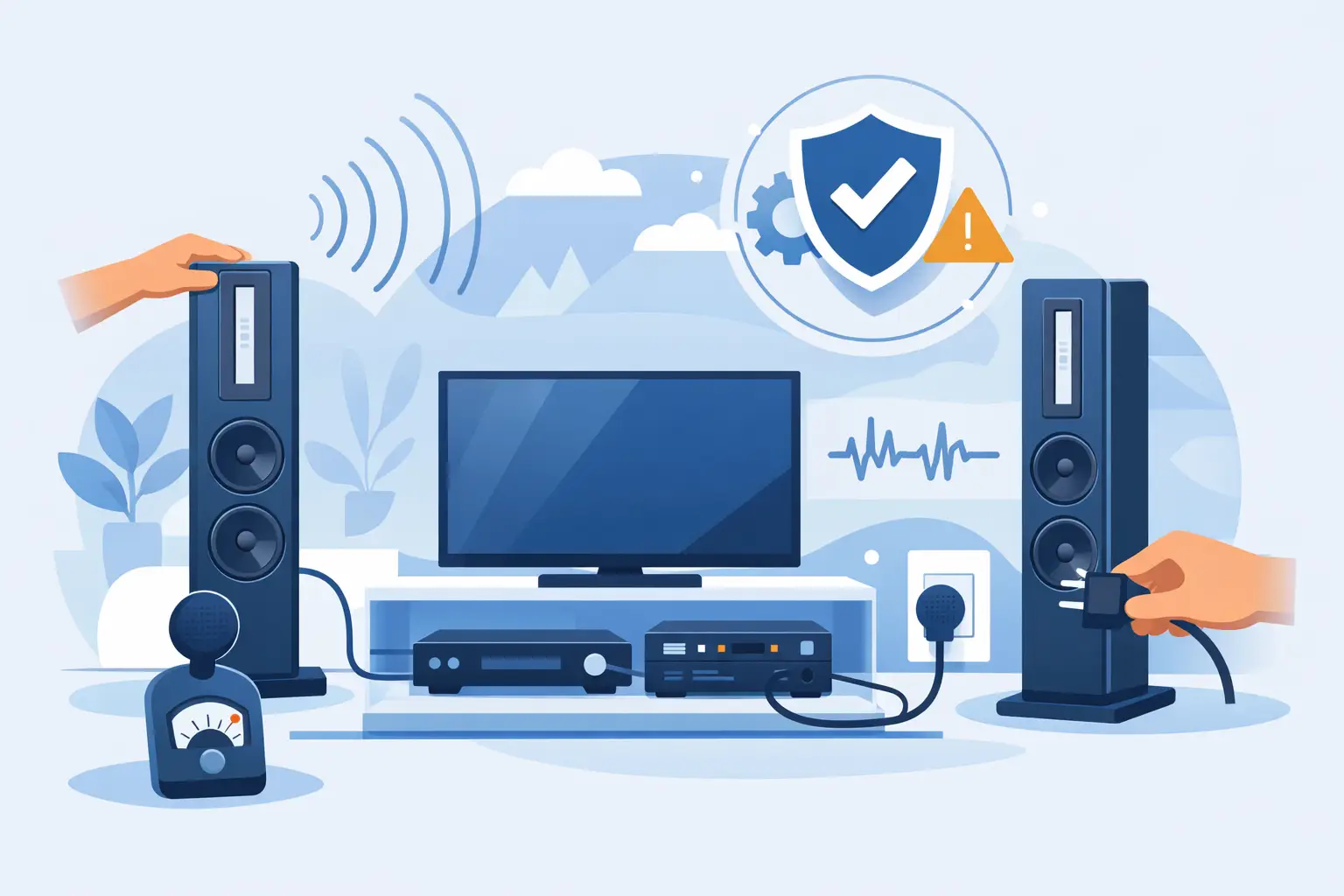
A ribbon loudspeaker can reveal breathtaking speed, texture, and spatial detail - and it can also punish careless setup. The same design traits that make ribbons exceptional in a serious listening room mean they deserve more discipline during unpacking, placement, amplifier matching, and first power-up. If you want to setup ribbon speakers safely, the goal is not caution for its own sake. It is preserving the transducer, protecting the amplifier interface, and giving the speaker a stable environment where it can perform as intended.
Why ribbon speakers demand a different setup approach
Ribbon designs are not generic box speakers with a slightly different tweeter. Depending on the implementation, the ribbon element can be extremely light, highly responsive, and more sensitive to handling errors, air pressure events, and amplifier behavior than conventional dome-based systems. That does not make them fragile in normal use, but it does mean setup should be deliberate.
The most common mistakes happen before music even plays. Owners rush the unboxing, grab the wrong part of the cabinet, connect speaker cables with the amplifier energized, or push the speakers into a room position that creates avoidable acoustic stress. A premium loudspeaker deserves better treatment than that, especially when ribbon technology is involved.
Prepare the room before the crates are opened
Safe setup begins with logistics. Clear the path from entry point to listening room and remove anything that forces awkward lifting angles. If the speaker ships in substantial packaging, measure doorways, turns, and floor transitions before moving anything. High-end ribbon speakers are often large, and a cramped move is where cabinet damage and driver accidents start.
Room readiness also matters acoustically. Choose an initial position that keeps the speakers away from HVAC vents, direct sunlight, and areas where children, pets, or frequent traffic can make contact with the front radiating surface. Ribbon elements should not be treated like a place to steady yourself while adjusting spikes or leveling feet.
If the floor is delicate, have protective material ready before the cabinets come off the pallet or out of the box. If the floor is suspended wood rather than slab, expect some iteration with footers, leveling, and final positioning. Safe setup is partly about mechanical stability. A speaker that rocks slightly is a speaker that invites trouble.
Unboxing and handling: where damage usually starts
When you setup ribbon speakers safely, the first rule is simple: never touch the ribbon itself or any exposed front assembly unless the manual explicitly says you should. Handle the speaker by the cabinet sections or designated lift points only. If two people are recommended, use two people. This is not a place for improvised heroics.
Keep jewelry, watches, belt buckles, and tools away from finished surfaces and driver areas while unpacking. Save every packing component until placement is finalized and the speakers have been tested. Premium loudspeakers are sometimes repositioned several times in the first week, and factory packaging is the safest way to move them again if needed.
It is also worth pausing to inspect before connection. Look for shipping damage, loose hardware, or anything visibly out of alignment. Do not assume that a cosmetic issue is purely cosmetic. If something appears wrong, stop there rather than forcing a full installation.
How to setup ribbon speakers safely with proper placement
Placement is not just a sonic decision. It affects driver stress, stability, and long-term reliability. Start with the manufacturer's baseline distances from the front wall and side walls, then refine from there. Ribbon speakers often reward careful orientation because their dispersion behavior can be more specific than traditional designs.
Avoid the temptation to place them too close to the front wall to save space. That may thicken bass, but it can also flatten depth and produce room interactions that lead owners to overcompensate elsewhere in the chain. The safer approach is controlled, measured movement in small increments while keeping the speaker fully supported and level.
Toe-in is another area where patience matters. Too little and you may lose image precision. Too much and the presentation can become overly direct depending on the ribbon geometry and listening distance. Make adjustments with the system powered down if there is any chance of contact with cable terminations or unstable footing. For larger models, one person should guide while another stabilizes.
Watch the environment around the ribbon
Ribbons do not appreciate blasts of moving air. Keep them away from forceful HVAC output, open windows with strong cross-breezes, and impulsive events such as slamming doors in small rooms. Under normal listening conditions this is rarely a problem, but a poorly placed speaker near an aggressive vent is asking the transducer to deal with something other than signal.
Dust control helps as well. A well-kept room is not only better for ownership pride. It reduces contamination risk around delicate transducer surfaces and connection points.
Amplifier matching is part of safe setup
One of the fastest ways to create trouble is to think of speaker safety only in physical terms. Electrical safety matters just as much. Ribbon speakers can expose amplifier weaknesses with unusual honesty, especially when the amplifier is unstable into demanding loads or prone to clipping under dynamic peaks.
Before connecting anything, power the amplifier off completely. If it is a tube design, let it discharge and stabilize according to the manufacturer's guidance. Then verify polarity, channel assignment, and terminal tightness. Loose spades, partially seated bananas, or stray wire strands are unacceptable in a high-resolution system and can become genuinely dangerous.
The right amplifier is not simply the one with the highest wattage figure. Current delivery, load tolerance, noise floor, and stability are usually more relevant. A smaller but well-controlled amplifier can be a safer partner than a more powerful unit that becomes harsh, clips early, or behaves unpredictably into the speaker's impedance profile. Experienced listeners know this, but it still gets overlooked when system changes happen quickly.
First power-up should be controlled, not casual
Set volume fully down before energizing the system. Start with a clean source and familiar material at low level. Listen for buzzes, asymmetry, or anything that suggests a connection error. If the speaker offers separate terminals or configurable crossover options, confirm those settings before serious playback begins.
Do not use test tones, aggressive bass tracks, or high-output sweeps as your first signal unless setup documentation specifically calls for them. The first hour is for confirmation, not bravado. Let the system prove that everything is stable.
Cable discipline and connection hygiene
High-end installations often fail basic cable management. Thick speaker cables can exert surprising leverage on binding posts, especially when the speaker is moved during fine placement. Route cables so they do not pull downward or sideways on the terminals. Give each run enough slack to allow minor positioning changes without stress.
Keep power cords and speaker cables sensibly organized, but do not force neatness at the expense of connector security. A beautifully dressed cable loom is useless if a spade loosens when the cabinet rotates a quarter inch.
Check connections again after final positioning. This is especially important with heavy cables, spike adjustments, or platforms that alter cabinet height after the initial hookup.
Safe break-in and early listening habits
There is a difference between normal break-in and abuse. When ribbons are new, resist the urge to evaluate them at live-event volume in the first session. Moderate listening over time is a smarter path. It lets suspensions, interfaces, and room interactions settle while giving you a clearer baseline for future adjustments.
If the sound is bright, lean, or spatially inconsistent on day one, that does not automatically mean something is wrong. Placement, seat height, toe-in, amplifier warm-up, and room balance all shape the result. Chasing a first impression with extreme EQ or excessive volume usually creates more problems than it solves.
For owners building a reference system, this is where a disciplined process pays off. Make one change at a time, log the position, and listen with known recordings. Precision setup tends to reward patience in a way mass-market speakers often do not.
Common mistakes when you setup ribbon speakers safely
Most avoidable problems are predictable. People lift from the wrong points, connect with live electronics, push the speaker into a poor room position, or use an amplifier that sounds acceptable at low level but falls apart when musical demands rise. Another frequent error is assuming all room issues are speaker issues. A reflective room can make an excellent ribbon design seem aggressive, while a heavily damped room can make it seem shut in.
There is also the question of protection versus performance. Some owners want the speakers far from all risk, which can lead to compromised placement and diminished imaging. Others chase the last few degrees of toe-in or the last inch of boundary distance while ignoring practical stability. The correct answer is rarely extreme. Safe setup is about preserving both the loudspeaker and the listening outcome.
If you are uncertain about a specific handling step, connection scheme, or amplifier pairing, stop and confirm before proceeding. That is not caution born of fear. It is how serious systems are built.
A well-set ribbon speaker does not announce safety as a virtue. It simply disappears into the room and lets the recording speak with speed, scale, and composure. Give it that foundation, and the speaker can spend its life doing what it was built to do.