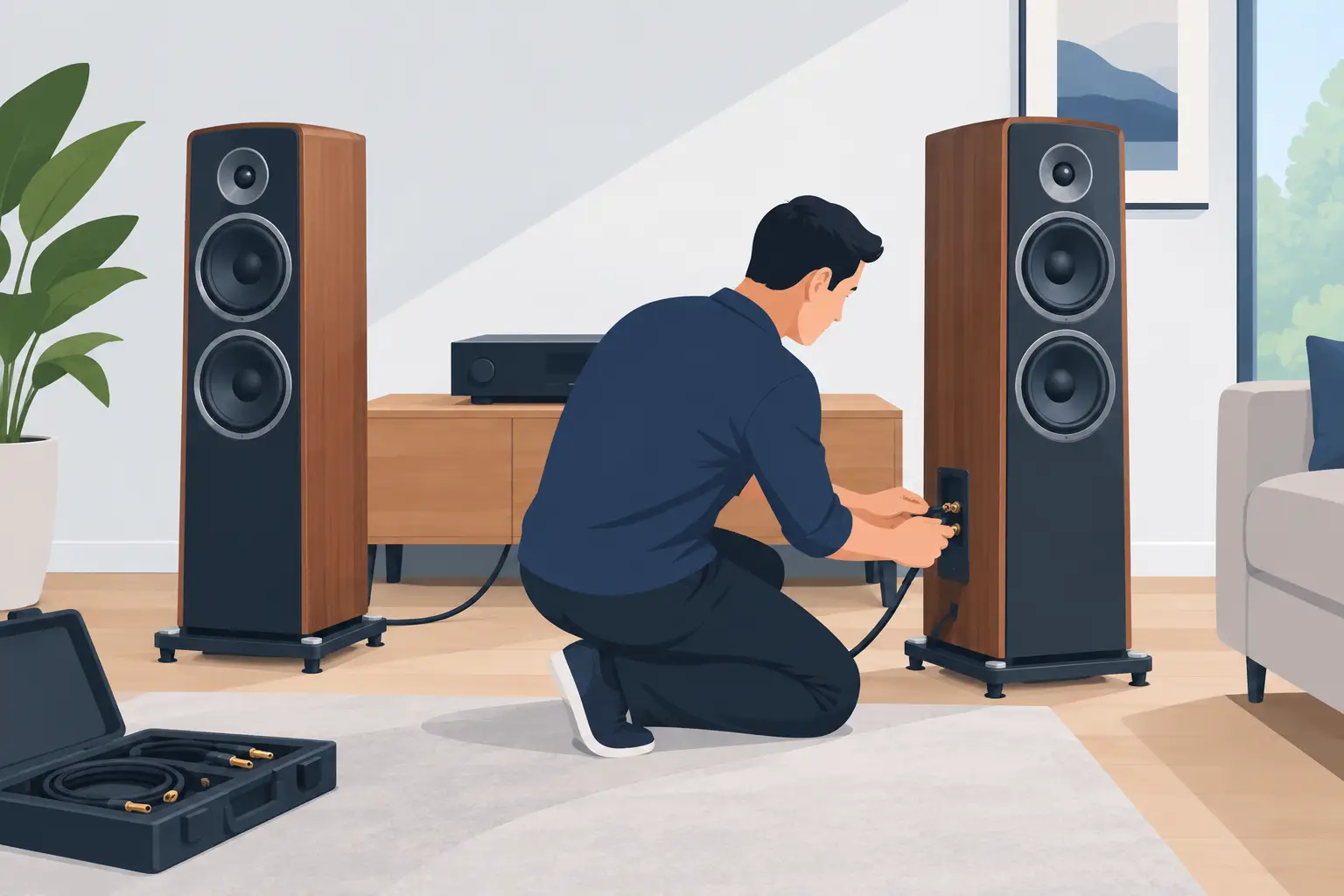
A reference loudspeaker is not a disposable appliance. Its serial number, purchase history, installation details, and service record can matter years after the first listening session. To register high end speakers properly is to establish a clear ownership record while the details are still available, not when a move, service request, or resale suddenly makes them necessary.
For ribbon loudspeakers in particular, the record should reflect more than a box arriving at the door. System matching, room placement, dealer setup, and careful handling are part of the ownership story. Registration is a small administrative task, but it supports a more considered relationship with a serious audio component.
Why register high end speakers?
Product registration typically gives a manufacturer or authorized dealer a dependable way to identify the exact pair you own and when it entered service. If technical support is needed, a complete registration can shorten the first stage of the conversation: model, finish, serial numbers, original purchase date, and selling dealer are already established.
It may also help you receive relevant service communications, documentation updates, or notices concerning your product. The precise benefits depend on the manufacturer and region, so read the registration and warranty terms rather than assuming that registration creates coverage beyond what the written policy provides.
There is another practical reason. Premium loudspeakers are long-term assets. A well-kept ownership file supports insurance documentation, estate planning, relocation, trade-in discussions, and private resale. It signals that the pair has been cared for with the same discipline applied to the rest of a thoughtfully assembled system.
Registration does not replace proof of purchase, insurance, or appropriate packing materials. It complements them. Keep the invoice and all original documents even after the registration confirmation arrives.
Prepare the details before you begin
The process is usually straightforward, but serial numbers and date fields are easy to enter incorrectly when the speakers are already in position. Gather the materials first, then complete the form in one sitting.
You will generally need the model name, finish, left and right serial numbers, purchase date, invoice or order number, and the name of the authorized dealer or distributor. Have your current contact information ready as well. If the system was installed by a dealer, record the installer and installation date in your own files, even when the registration form does not request them.
Serial-number labels may be placed on the rear panel, base, carton label, or another model-specific location. Consult the owner’s manual before moving a loudspeaker to inspect it. Large high-end designs can be difficult to reposition safely, and a hurried attempt can risk cabinet damage, floor damage, or personal injury.
Photograph both serial-number labels in good light. Then photograph the pair in its installed location, including a wider image that shows its relationship to the room. These images are useful for insurance records and can provide valuable context if a support specialist needs to understand an installation concern.
Confirm that the pair is correctly identified
A stereo pair should have two unique serial numbers. Do not register only the number from one carton or assume that sequential numbers are interchangeable. Enter each number exactly as shown, including prefixes, zeros, hyphens, and suffixes.
If the speakers were delivered by a dealer, compare the numbers on the cabinets with the invoice and packing documentation. Resolve any discrepancy before registration. Accurate records are especially valuable for models with matched finishes, production revisions, or specialized service requirements.
How to complete the registration
Start with the manufacturer’s official product-registration channel. Use the account email address you intend to keep, rather than a temporary installer or household address. A long-lived email account makes it easier to retrieve confirmations, manuals, and service history later.
Enter ownership and product information exactly as it appears on the sales invoice and labels. If a form asks whether the speaker was purchased new, dealer-demonstration stock, or pre-owned, answer plainly. The ownership path can affect what records the manufacturer needs to verify service options or a transfer request.
When the form asks about your system, provide useful technical context without guessing. Amplifier make and model, source components, and room dimensions can help establish a baseline for future support. Do not report cable specifications, power ratings, or installation details you cannot verify. A precise, limited record is better than a detailed but unreliable one.
Before submitting, review the spelling of your name, shipping address, email, model, and both serial numbers. Save a screenshot or PDF of the completed registration if the site provides no confirmation page. Once the confirmation email arrives, store it with the invoice rather than leaving it buried in an inbox.
For Clarisys Audio owners, registration should sit alongside the resources that make long-term ownership easier: the relevant manual, technical documentation, dealer contact, and a record of any service discussion. Treat the account as part of the product’s support infrastructure, not merely a marketing preference center.
Build an ownership file that remains useful
Registration is the beginning of your documentation, not the whole of it. Create a digital folder and a physical file for records that should remain with the speakers. Use a consistent naming convention so files can be found quickly, such as model, serial number, and document type.
Keep these materials together:
- Original invoice, order confirmation, and proof of payment
- Registration confirmation and written warranty terms
- Serial-number, installation, and condition photographs
- Owner’s manual, setup guidance, and packing instructions
- Service records, dealer correspondence, and transportation notes
If you make material changes to the system, add a dated note. This could include moving to a different room, changing amplifiers, replacing a damaged grille, or having the speakers professionally packed for a move. The goal is not to create paperwork for its own sake. It is to preserve facts that may be difficult to reconstruct later.
Registration after a pre-owned purchase
Pre-owned ownership requires a slightly different approach. First, ask the seller for the original invoice, service history, manuals, accessories, and factory packaging. A legitimate seller may not have every item, particularly for an older pair, but the available documentation helps establish provenance.
Contact the manufacturer or authorized distributor before assuming a prior registration can be transferred. Some brands permit ownership updates, while others require a fresh registration, dealer inspection, or proof that the product was acquired through an approved channel. Warranty coverage, if any, may not transfer with the loudspeaker.
Be candid about the purchase source and condition. A manufacturer can offer better guidance when it knows whether the pair came from an authorized dealer, certified pre-owned marketplace, private seller, or estate sale. Never alter or remove serial-number labels to make registration easier. Missing or damaged identification should be discussed directly with support.
Privacy, communications, and practical boundaries
A registration form often includes optional marketing permissions. Choose the communication settings that suit you. Service and safety-related messages may be handled differently from product announcements, dealer events, or newsletter communications, so read the choices rather than selecting everything by default.
Avoid submitting more personal information than a form requires. A manufacturer needs enough information to identify ownership and provide support, but you should not send financial account details, identification documents, or unrelated system passwords through a standard registration channel.
If your speakers are part of a collection, consider recording their insured value separately with your insurer. Registration can support a claim, but it is not an appraisal and does not establish replacement value. High-end audio values can vary with condition, age, finish, market demand, and the availability of original packaging.
Keep the record current without overmanaging it
You do not need to revisit registration every month. Review your ownership file after a move, a change of contact information, a major service event, or a transfer of ownership. If the manufacturer offers an account portal, verify that the serial numbers and contact details remain correct.
The most useful record is one you can hand to a dealer, technician, insurer, or future owner without filling gaps from memory. Register the speakers carefully, preserve the supporting documents, and return your attention to the reason they are in the room: sustained, revealing listening.